Blocked Stormwater Drain Solutions for Sydney Residents
When the Next Downpour Hits, Your Stormwater System Has One Job
A blocked stormwater drain might not seem as urgent as a blocked sewer — until the next heavy downpour sends water pooling around your foundations, flooding your yard, or backing up into your garage. Stormwater drains are designed to carry rainwater away from your property quickly and efficiently. When they block, the consequences can be expensive.
Sydney’s climate means heavy, sudden rainfall is a regular occurrence. Properties across the Eastern Suburbs, North Shore, Inner West, and Western Sydney are all vulnerable to stormwater blockages — particularly older properties with ageing earthenware or concrete stormwater pipes. Below: what causes blocked stormwater drains, what you can do about it, and when you need a professional.
Stormwater drains block for different reasons than sewer drains. They carry rainwater — not household waste — so the culprits are environmental rather than domestic.
Cause 1 of 5
1
Leaves & Garden Debris
The most common cause. Leaves, twigs, bark, mulch, and garden clippings wash into stormwater grates during rain, accumulate inside the pipe, and gradually reduce flow until the drain blocks completely. Properties with large trees or mature gardens are particularly susceptible.
Cause 2 of 5
2
Tree Root Intrusion
Just like sewer pipes, stormwater pipes are vulnerable to tree root invasion — particularly older clay, earthenware, and concrete pipes with loose joints and hairline cracks. Roots enter the pipe seeking moisture and expand inside, creating dense blockages that worsen over time. Tree root blockages in stormwater pipes are extremely common across Sydney’s older suburbs.
Cause 3 of 5
3
Sediment & Soil Build-Up
Dirt, sand, and soil washed into stormwater drains during rain or garden watering settle inside the pipe over time. Properties with recent landscaping work, construction activity, or sloped gardens are especially vulnerable to sediment accumulation.
Cause 4 of 5
4
Broken or Collapsed Pipes
Ageing stormwater pipes deteriorate from ground movement, root pressure, and general wear. Cracked, displaced, or collapsed sections restrict flow and trap debris, causing recurring blockages that cannot be resolved by clearing alone.
Cause 5 of 5
5
Construction Debris
On properties that have undergone renovation or building work, it’s not uncommon for concrete, plaster, or building materials to enter the stormwater system — either directly or through soil runoff. These materials harden inside the pipe and create stubborn blockages.
Signs Your Stormwater Drain Is Blocked
Stormwater blockages often go unnoticed until it rains. Look out for these warning signs — the earlier you spot them, the cheaper they are to fix.
💧
Water Pooling Around Foundations
Standing water in your yard, garden, or around the base of your property during or after rain — particularly in areas that normally drain freely. Standing water near foundations can lead to rising damp, mould, and structural damage over time.
🌧
Overflowing Gutters & Downpipes
Gutters overflow when the stormwater system can’t handle the volume. If your gutters overflow during moderate rain (not just extreme storms), the downstream stormwater pipe is likely partially or fully blocked.
🏠
Water in Garage, Subfloor or Basement
Water entering enclosed spaces during rain indicates the stormwater system is backing up because it can’t discharge water fast enough. Damage to stored items and structural elements escalates quickly.
☠
Erosion or Sinkholes Near Pipe Runs
Erosion or sinkholes appearing in your garden near stormwater pipe runs can indicate a broken or leaking stormwater pipe beneath the surface. Don’t ignore these — they get worse fast.
🚫
Grates with Standing Water
Stormwater grates with visible debris build-up, or standing water that doesn’t drain after rain stops — both signal that water can’t enter or pass through the system properly.
What You Can Do — DIY Stormwater Maintenance
While professional clearing is needed for blockages inside the pipe, there are practical steps you can take to maintain your stormwater system and reduce the risk of blockages.
✓
Clear Stormwater Grates Regularly
Remove leaves, debris, and sediment from all visible stormwater grates on your property — particularly before autumn and winter when leaf fall is heaviest and storms are more frequent. A blocked grate prevents water from entering the system at all, causing surface flooding.
✓
Keep Gutters & Downpipes Clean
Gutters full of leaves discharge debris directly into your stormwater pipes. Clean gutters at least twice a year — before winter and after autumn leaf fall. Install gutter guards if you have overhanging trees.
✓
Redirect Garden Runoff Away from Inlets
If garden watering or irrigation is washing soil and mulch toward your stormwater grates, redirect the flow or install silt traps to catch sediment before it enters the pipe.
✓
Trim Vegetation Near Pipe Runs
If you know where your stormwater pipes run underground, keep tree planting and heavy root-zone plants well clear. Tree roots will find and invade any crack or joint in the pipe.
⚠ Important: Don’t Try to Clear Inside the Pipe Yourself
DIY methods like garden hoses and drain snakes are not effective for stormwater systems — they can push debris further into the pipe and worsen the problem. Once the blockage is below the grate, professional clearing is the only effective solution.
Professional Stormwater Drain Clearing
When the blockage is inside the pipe — below the grate and beyond what you can see or reach — this is how a licensed plumber resolves it.
Stage 1 of 4
1
CCTV Drain Inspection
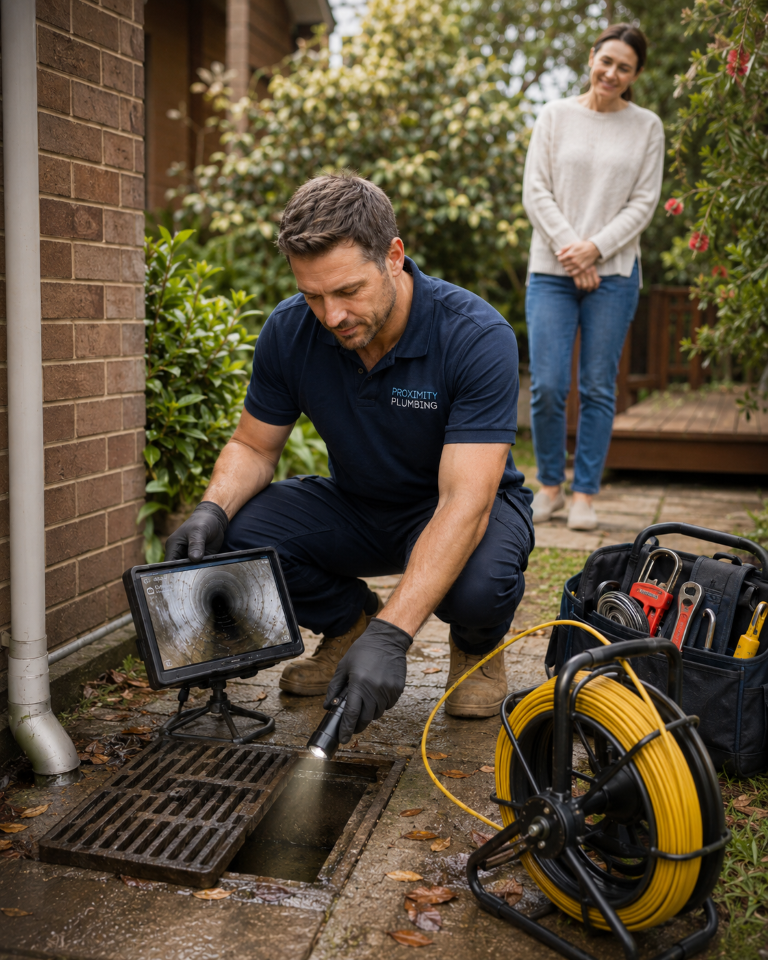
A high-definition waterproof camera is inserted into the stormwater pipe to locate the blockage, identify the cause (roots, debris, pipe damage), and assess overall pipe condition. This is essential for understanding whether clearing alone will resolve the issue or whether repair is also needed.
Stage 2 of 4
2
Hydro-Jetting
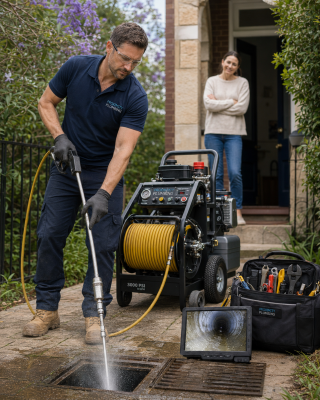
High-pressure water jetting at up to 5,000 PSI is the most effective method for clearing stormwater blockages. The high-pressure stream flushes leaves, sediment, roots, and debris from the full length and diameter of the pipe — not just the blockage point. Hydro-jetting is safe for all stormwater pipe types including clay, concrete, PVC, and cast iron, and uses only water — no chemicals.
Stage 3 of 4
3
Root Cutting
For stormwater pipes invaded by tree roots, our plumbers use root cutting turbines combined with hydro-jetting to clear root masses and restore full pipe flow. After clearing, CCTV inspection confirms the pipe condition and identifies whether pipe relining is recommended to prevent roots from re-entering.
For cracked, root-damaged, or deteriorating stormwater pipes, pipe relining creates a new structural pipe within the existing pipe — without excavation. The epoxy liner has a 50-year life expectancy, seals root entry points permanently, and is suitable for stormwater pipes of all materials and sizes.
Proximity Plumbing provides dedicated stormwater drain clearing services across Sydney with a $0 call-out fee, transparent flat-rate pricing, and upfront fixed-price quotes — no overtime fees regardless of when you call.
Who Is Responsible for Stormwater Drains?
Like sewer drains, responsibility for stormwater drains is shared between property owners and the local council or Sydney Water.
🏠 Your Responsibility
Within Your Property Boundary
All stormwater pipes, pits, and drainage infrastructure within your property boundary — including the pipes connecting your property to the council stormwater main in the street. If a blockage occurs within your private stormwater system, you need to engage a licensed plumber.
📍 Council / Sydney Water Responsibility
Public Stormwater Network
The main stormwater network beneath public land (streets, footpaths, parks) is managed by your local council or Sydney Water. If flooding originates from the public system — the street is flooding, or the public pit is overflowing — contact your local council.
If you’re unsure where the blockage sits, our plumbers determine this during the CCTV inspection and advise you accordingly. For a full explanation of drainage responsibilities in Sydney, read our guide on property owner vs Sydney Water responsibilities.
Preventing Blocked Stormwater Drains
The most effective way to avoid blocked stormwater drains is regular maintenance.
✓Clear all stormwater grates on your property at least quarterly — monthly during autumn.
✓Clean gutters and downpipes twice a year.
✓Schedule a professional CCTV stormwater inspection every 12 months if you have mature trees near pipe runs or a history of blockages.
✓For properties with recurring root intrusion, discuss pipe relining with your plumber as a permanent solution.
Scheduled Stormwater Maintenance Programs
Proximity Plumbing offers scheduled stormwater maintenance programs for residential and commercial properties — including regular CCTV inspections, hydro-jet flushing, and condition reporting. Call 0420 102 394 to discuss a maintenance plan tailored to your property.
Frequently Asked Questions
The cost depends on the blockage location, cause, and severity. A straightforward debris blockage in an accessible stormwater pipe costs less than a deep root intrusion requiring hydro-jetting and CCTV inspection. Proximity Plumbing provides an upfront fixed-price quote before work begins — with a $0 call-out fee for the initial assessment.
Yes — tree root intrusion is one of the most common causes of blocked stormwater drains in Sydney, particularly in older suburbs with mature trees and ageing clay or concrete pipes. Roots enter through cracks and joints, expand inside the pipe, and trap debris. Hydro-jetting with root cutting turbines clears the blockage, and pipe relining prevents roots from re-entering.
If water is pooling within your property boundary during rain — in your yard, around foundations, or entering your garage — the blockage is most likely in your private stormwater system. If flooding is occurring on the street or footpath, or the public stormwater pit is overflowing, contact your local council. A CCTV inspection by a licensed plumber can confirm where the blockage sits.
Blocked Stormwater Drain in Sydney?
Don’t wait for the next downpour to find out. We’ll diagnose the blockage with CCTV, clear it with hydro-jetting, and tell you exactly what it’ll take to stop it coming back — with no call-out fee for our time.
Hydro Jetting vs Traditional Drain Clearing: Which Is Better?
7 min read
Three Clearing Methods, One Best Choice for Most Sydney Blockages When a plumber arrives to clear a blocked drain, the method they use makes a real difference to how well the blockage is cleared, how....
When Sewage Backs Up, Minutes Matter — Here’s What to Do A blocked drain can go from inconvenience to emergency in a matter of hours. When sewage is backing up into your home, water is pooling around....
Common Causes of Blocked Drains and How to Fix Them
8 min read
Diagnosing the Cause is the First Step to a Permanent Fix If you’re dealing with a blocked drain, you’re not alone — blocked drains are one of the most common plumbing issues we attend across Sydney.....
Most Sydney Drain Blockages Can Be Cleared in Under 15 Minutes A blocked drain is one of the most common plumbing problems in Sydney homes. Before you call a plumber, there are several safe methods yo....
Not sure where to start? Just give us a call and we’ll guide you through your options step by step. Our team will explain everything clearly, offer expert advice, and if it suits you, we can send someone out today.